
World Congress of Biomechanics 2026 Student Events
The ASB Student Committee has been actively supporting student-centered programming for the 2026 World Congress of Biomechanics (WCB), including several events designed to promote professional development, networking, and career exploration for students and early-career researchers.
Professional Development Roundtable Event
The Professional Development Roundtable Event will invite undergraduate and graduate students, and post-docs to participate in interactive small-group discussions with experienced professionals in biomechanics.
Each table will focus on a specific topic relevant to global career development, such as international funding opportunities, cultural differences in research, emerging technologies, postdoctoral experiences abroad, open science, and career pathways across academia, industry, and clinical settings. These conversations will provide practical advice, shared experiences, and targeted resources to help participants navigate research environments across cultures and sectors.
Roundtable leaders will include researchers and professionals from academia, industry, and clinical fields. Attendees will have the opportunity to expand their professional networks, gain insight into international collaborations, and engage in meaningful mentorship. Whether you are considering a postdoc abroad, interested in open science, or exploring alternative careers in biomechanics, this session is designed to inform, inspire, and empower the next generation of biomechanics professionals.
Job Market Poster Session
The Job Market Poster Session will provide an opportunity for early-career professionals, including students within one year of graduation and postdoctoral fellows, to introduce themselves to prospective mentors, employers, collaborators, and recruiting organizations.
In this session, presenters will create a poster that functions as a visual CV. Posters may highlight education, research experience, technical expertise, professional interests, career goals, and future career aspirations. This format will allow attendees with current or anticipated recruiting needs to efficiently learn about candidates and engage in informal career conversations.
The session is designed to support professional development, facilitate networking, and strengthen connections between emerging biomechanists and organizations seeking new talent.
Beyond the Lab: Growing Your Scientific Network
Led by Peter Schull, Valentina Graci, Kurt Beschorner, Ariana Ortigaz Vasquez, and Anja Niehoff, this session will help students connect with professionals across all areas of biomechanics.
Networking can often feel awkward or intimidating, especially when it involves starting conversations with new people. However, networking does not have to feel like a chore. At its core, networking is about building genuine, mutually beneficial connections. WCB provides an ideal environment for developing these relationships, and this workshop will help participants approach networking in a way that feels natural, effective, and aligned with their individual strengths.
Participants will learn strategies for connecting with others across different personality types and comfort levels, practice creating a polished and authentic elevator pitch, and begin building their own professional network. Whether you are new to the field or already well connected, this event will offer a relaxed and welcoming space to share experiences, build community, and develop professional skills.
By the end of the workshop, participants will leave with a new perspective on networking as a tool for building meaningful collaborative relationships, practical strategies for engaging with others, and a stronger foundation for growing their scientific network.
To get the specific details about the event follow the link: https://wcb2026.com/student-activities/
Student Rep and New Student Rep-Elect Roles
Serving as the ASB Student Rep has been an incredible honor. This role has helped me feel much more connected to the biomechanics community, especially to other PhD students, and that has been one of the most meaningful parts of the experience.
Through Student Committee meetings, conversations with students, questions received by email, interactions with other labs through ASB Cross Lab Motion, and thank-you messages after webinars and events, I have come to appreciate how important peer-to-peer networking is. Networking is often framed as something we do with professors, senior scientists, or professionals further along in their careers, but connecting with our peers is just as valuable.
There is something energizing about being surrounded by people who share a love for biomechanics. That sense of community encourages us to support one another while advancing the field with rigor, curiosity, and passion.
This experience has also highlighted the value of creating more opportunities for students to serve in leadership roles. The Student Rep-Elect position will allow more students to experience a leadership role through yearly elections while also making the workload more manageable for the ASB Student Rep. ASB PhD students balance many responsibilities, and serving as student rep is a significant commitment. The role often requires approximately four hours per week for meetings, responding to emails, contacting members, organizing events, and supporting student initiatives, with additional time needed around the time of the annual meeting.
Having both a Student Rep and a Student Rep-Elect will help distribute responsibilities, provide continuity in student leadership, and give more students the opportunity to contribute to ASB in a meaningful way. This structure will strengthen student representation while supporting the growth and impact of the ASB Student Committee.
Who is in the ASB Student Committee anyway?
Learn about some of the members of the ASB student committee!
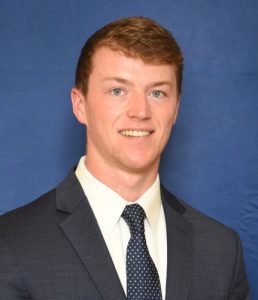 Marty Kilbane – PhD Student at the University of Michigan
Research focus: I am doing my PhD at the University of Michigan with a research focus in lower limb prosthetics.
Who is my PI: Dr. Deanna Gates.
What do I enjoy about biomechanics: Biomechanics often involves interdisciplinary collaboration between engineers, clinicians, and others. I enjoy both the engineering aspects of research like data collection and analysis as well as interacting with the patients and participants to see the direct impact of my work.
What is a piece of advice for an undergrad interested in grad school: I would encourage undergraduates that it is never too late to get involved in research. I joined a research lab my senior year, and that experience motivated me to apply to PhD programs.
What inspired me to pursue biomechanics:I thought about applying to medical school after graduating because I was interested in clinical work with assistive technology. However, once my classes and research introduced me to human movement biomechanics, I found that it was a better way to merge my passions for both engineering and the medical field.
What is a fun fact about me outside of research: A fun fact is that I have a twin brother named Michael.
 Sam Hopkins – PhD Student at Northern Arizona University
Research focus: I develop and study variable stiffness, robotic ankle foot orthoses for individuals with cerebral palsy.
Who is my PI: Dr. Zach Lerner.
What do I enjoy about biomechanics: Over 40 million Americans have difficulties walking or climbing stairs. I see that difficulty almost everywhere I go, and even within my own family. Biomechanics is a powerful tool for understanding and overcoming mobility challenges. Being able to tackle such a huge problem is what makes my work meaningful and keeps me motivated.
What is a piece of advice for an undergrad interested in grad school: Find something that excites you, work on that. Graduate school can be hard, and even harder if you don’t enjoy it. Work on something that makes you want to keep pushing even when your code breaks, your experiment fails, or your paper gets a billion comments back on it. Challenges are unavoidable, but what makes someone successful in grad school and beyond is the motivation to keep accepting those challenges.
What inspired me to pursue biomechanics: “Quality of life” is a major part of our field, and I learned early on what a reduction in quality of life looks like when mobility difficulties impair your function. When my grandfather was diagnosed with cancer in 2013, his physical condition quickly deteriorated. As a young kid, I felt powerless standing on the sideline as he struggled to move about the house or pick himself up after a fall. Somedays, we needed three people to get him out of a chair. At that time, I was fascinated by Iron Man (#3 in 2013) because it’s an example of someone using technology to be superhuman. I wanted to bring exoskeletons to the real world so my grandpa could stay superhuman the way I saw him. He’s gone, but I hold on to these memories because they’re what give my research purpose.
What is a fun fact about me outside of research: I’m from Rhode Island! We may be a small state but we still exist! Come talk to me at ASB if you’re still working on your “meet someone from all 50 states” quest!
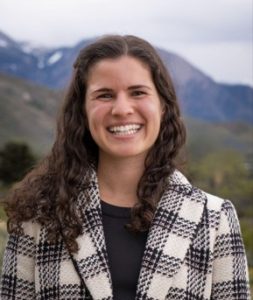 Elie Bowman – PhD Student at University of Utah
Research focus: Foot and ankle mechanics and morphology
Who is my PI: Amy Lenz
What do I enjoy about biomechanics: Connecting healthcare with engineering applications
What is a piece of advice for an undergrad interested in grad school: The top three considerations should be (1) advisor, (2) research, and (3) location.
What inspired me to pursue biomechanics: Being able to combine my two passions of engineering and biology
What is a fun fact about me outside of research: I compete in ultra-marathons!
 Sam Weiss – PhD Student at Virginia Tech
Research focus: Return-to-function, injury prevention, and women’s health.
Who is my PI: Dr. Robin Queen and Dr. Sara Arena.
What do I enjoy about biomechanics: I love the ability to better understand and help people return to activities they love or prevent an injury that would make them unable to participate in desired activities. Learning and asking questions about how individuals move following injuries, postpartum, and as we age gives me the opportunity to educate those around me! I also love how translatable biomechanics can be.
What is a piece of advice for an undergrad interested in grad school: Trust your gut and embrace failure. If there are opportunities you want to go after or questions you want to ask that your gut believes in, then go for it (and be open to constructive criticism)! Failure is a crucial part of the graduate school journey and personal growth. Embrace it! But make sure you are not failing to listen to yourself.
What inspired me to pursue biomechanics: Growing up, I was always getting injured playing sports, which meant I couldn’t compete with friends or enjoy pain-free movement. I did not understand why this kept happening to me or how to use scientific literature to learn about injury prevention. From there, I made it my personal goal to never let another female athlete feel like they didn’t have the information to understand why they were getting injured and minimize injury risk. I also love to learn about women’s health, which is one of the factors that led me to a dissertation focusing on postpartum women. Understanding how movement can be changed based on sex, age, injury, and even following birth is incredibly fascinating to me, and there is so much more to learn about it!
What is a fun fact about me outside of research: Outside of research I enjoy running, women’s rugby, and late-night ice cream runs with friends on my motorcycle!
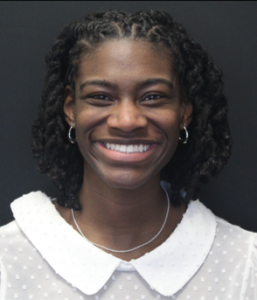 Jania Williams – PhD Candidate at the University of Nebraska at Omaha
Research focus: The clinical translation of biomechanics to improve mobility, function, and quality of life in individuals with movement impairments. Specifically, I study wearable assistive devices such as exoskeletons and orthoses, as well as rehabilitation interventions for clinical populations including peripheral artery disease and older adults.
Who is my PI: Dr. Farahnaz Fallahtafti
What do I enjoy about biomechanics: What I enjoy most about biomechanics is its ability to connect engineering, medicine, and human movement. Biomechanics allows us to understand how the body functions as a system and apply that knowledge to improve people’s lives. Whether it’s helping someone walk farther, reduce pain, or maintain independence, biomechanics gives us a way to translate science into meaningful real-world impact.
What is a piece of advice for an undergrad interested in grad school: Don’t let uncertainty stop you from pursuing opportunities. You do not need to have everything figured out before applying to graduate school. Be willing to ask questions, seek mentorship, and embrace challenges that stretch your abilities. Growth often happens when you step into opportunities before you feel completely ready.
What inspired me to pursue biomechanics: I was initially drawn to biomechanics because it combined my interests in engineering, healthcare, and problem-solving. As I gained research experience, I became increasingly interested in using biomechanics to address real clinical challenges. Knowing that my work has the potential to improve mobility, independence, and quality of life for individuals with chronic conditions continues to motivate my research today.
What is a fun fact about me outside of research: A fun fact about me is that I love Xtreme Hip Hop! It’s a high-energy step aerobics class with great music, amazing people, and a surprisingly challenging cardio workout. It gives me an opportunity to disconnect from research for a little while, have fun, and just be a regular human instead of a scientist.
 Madison Wissman – PhD candidate at Washington University in St. Louis
Research focus: My work uses musculoskeletal models to understand how surgery and rehabilitation affect biomechanics in individuals with hip dysplasia.
Who is my PI: Dr. Michael Harris
What do I enjoy about biomechanics: I love that studying biomechanics can provide new ways to enhance and support movement in populations whose quality of life is affected by movement deficits
What inspired me to pursue biomechanics: I chose to pursue biomechanics because it allows me to apply engineering methods to better understand human movement and improve patient outcomes.
One piece of advice or a philosophy for success: One piece of advice for students interested in graduate school is to approach everything with a growth mindset. If every experience is an opportunity to learn, it becomes easier to let go of perfection and recognize the value of progress over time.
What is a fun fact about me outside of research: Outside of research, I love reading and going bowling with friends.